 Ventura, CA Headquarters

Precision Fire Protection News
Key Changes Proposed for the 2025 Edition of NFPA 13

Sloped Ceilings, Vacuum Systems, and More: Key Changes Proposed for the 2025 Edition of NFPA 13
Twenty-one NFPA® codes and standards are part of the annual 2024 revision cycle, meaning 2025 editions of those documents will be released in the fall. NFPA 13, Standard for the Installation of Sprinkler Systems, is one of those documents.
From storage protection under sloped ceilings to sprinkler requirements in elevator pits, this blog breaks down some of the notable proposed changes for the new edition of NFPA 13. (A version of this blog will appear in the Summer 2024 issue of NFPA Journal.)
Storage Protection Under Sloped Ceilings
Some of the most significant proposed changes to the 2025 edition of NFPA 13 address storage protection under sloped ceilings. The impetus for the changes comes from findings in a recent Fire Protection Research Foundation report, “Protection of Storage Under Sloped Ceilings Phase III: Large-Scale Testing Summary and Guidance.” The report implemented a full-scale test plan with the goal of determining the impact of sloped ceilings on the protection of storage.
RELATED: Read more about the first two phases of the FPRF project.
The findings provided the technical basis for several new requirements and additional guidance in NFPA 13 related to sprinkler protection for ceilings with a pitch steeper than 2 in 12, or about 9.5 degrees. Testing has demonstrated that that fire control can be achieved with sprinklers protecting storage under ceilings up to and including a slope of 4 in 12, or about 18.5 degrees. This resulted in a change to NFPA 13 whereby early suppression fast response (ESFR) sprinklers, as well as control mode specific application (CMSA) sprinklers, can now be installed in spaces with a ceiling slope of up to 4 in 12. Testing has also clarified when sprinkler deflectors in buildings with slopped ceilings should be aligned to be parallel with the ceiling or stairs and when it is permissible for them to be aligned parallel to the floor. There are several locations in NFPA 13 that have proposed changes to reflect this finding.
Vacuum Systems
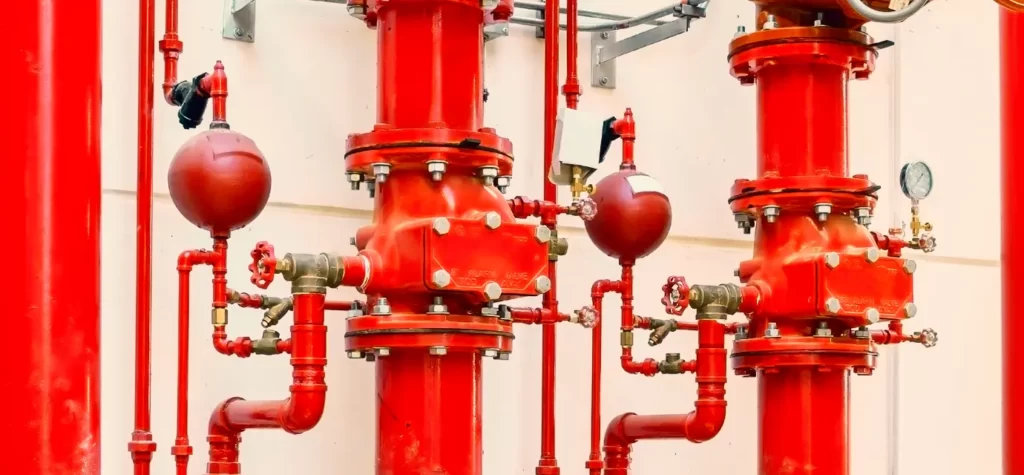
Another important change to the standard concerns vacuum systems. Sometimes called negative pressure systems, vacuum systems are dry or preaction sprinkler systems that include sprinklers attached to a piping system containing air under negative gauge pressure. Vacuum systems reduce the oxygen in the system, and the vacuum pump removes residual water (condensation) to inhibit corrosion. As a result, they are able to use a lower C-value—which refers to internal pipe roughness in the Hazen Williams formula—because they should have less corrosion in them when compared to dry or preaction systems that contain air. A new section on vacuum systems has been added to Chapter 8, but many of the requirements are the same as traditional dry or preaction systems.
Supplemental Sprinklers
Additionally, the 2025 edition of NFPA 13 introduces the term “supplemental sprinklers,” which is defined in Chapter 3 as “a sprinkler that is installed below an obstruction.” Several sections on obstructions were rewritten using the term “supplemental sprinklers.” New language was also added to include information on various characteristics of supplemental sprinklers, including the positioning, spacing, response, temperature, and k-factor. Chapter 28 added specific language on when and how supplemental sprinklers need to be hydraulically calculated.
Seismic Bracing
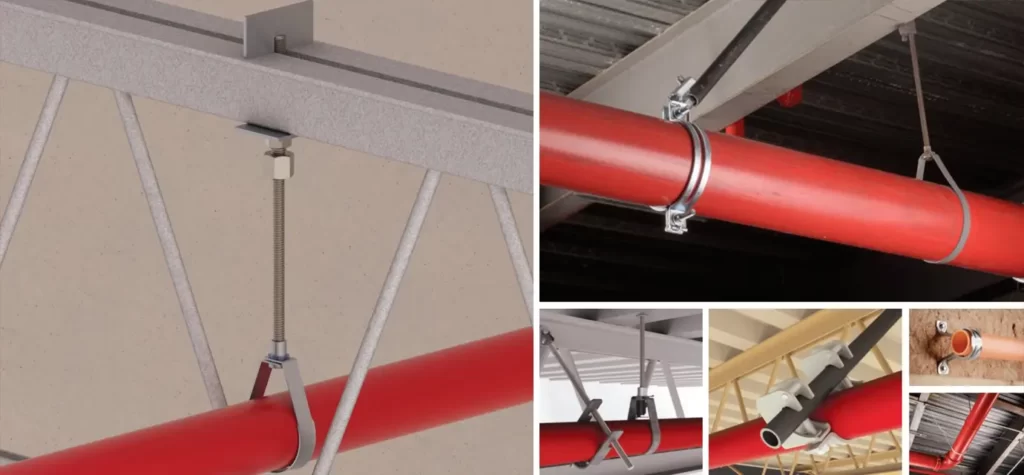
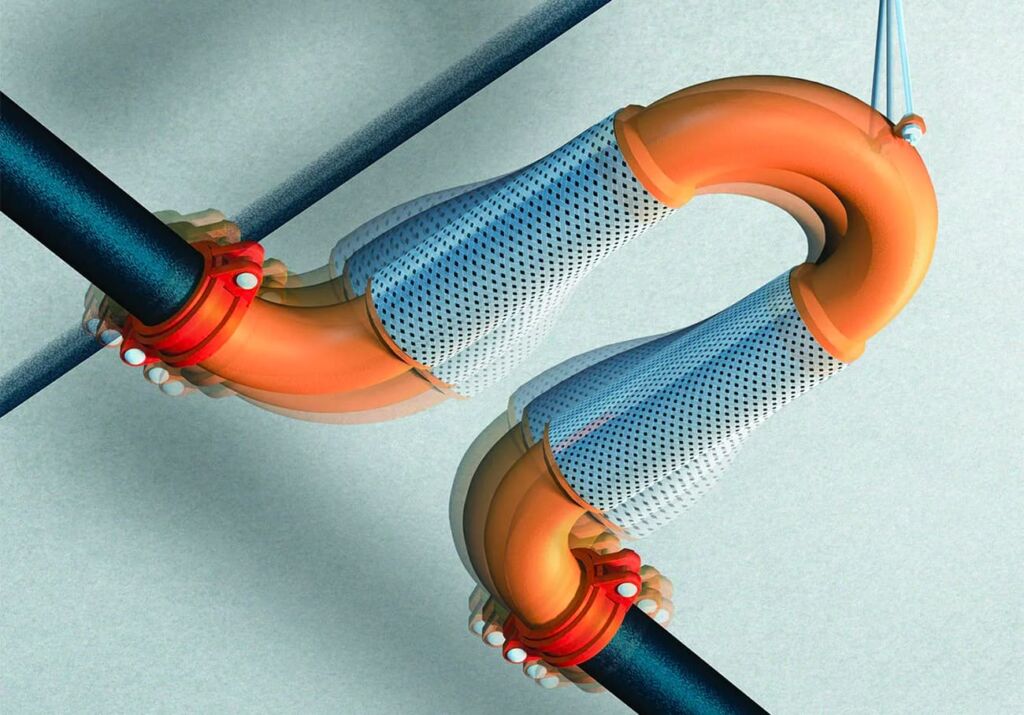
Another change addresses the seismic bracing section of NFPA 13, which has been overhauled in this edition to correlate with the recent changes to ASCE/SEI 7, Minimum Design Loads and Associated Criteria for Buildings and Other Structures. The section on calculating horizontal force on bracing has been redone to integrate ASCE/SEI 7 and introduce the design spectral response acceleration at short periods, which is used to measure of the maximum force an object experiences in an earthquake. The maximum intervals of sprinkler piping restraints have also been updated to align with ASCE/SEI 7. It’s noteworthy that there was a tentative interim amendment submitted to the 2022 edition of NFPA 13 on this topic.
Other Changes
A number of secondary changes are also proposed for the standard, including one addressing elevator shafts; sprinklers are no longer required in elevator pits, and they are only required at the top of hoistways under certain conditions. Another change focuses on sections addressing miscellaneous and low-piled storage, which have been simplified and reorganized; the sections have been separated to make it easier for users to follow. Finally, language that referred to the evaluation or modification of existing systems, along with the relevant density/area curves, has been removed from the 2025 edition of the standard. It was replaced with language in Chapter 30 stating that existing systems should be evaluated to the edition of NFPA 13 used to originally design and install the system, or the current edition of NFPA 13.
This edition of NFPA 13 incorporates changes to make the standard more consistently organized and user friendly, reduce redundant requirements, and correct errors found in the previous edition. The standard will be discussed at this year’s Technical Meeting at the NFPA Conference & Expo® in Orlando; expect to see the 2025 edition of NFPA 13 published in September.
Preceding the 2024 Technical Meeting, a C&E education session will also discuss the proposed changes to NFPA 13. William Koffel, chair of the Automatic Sprinkler Systems Technical Committee, will lead that session, titled “What Is New in NFPA 13 for 2025?” from 3:45–4:45 p.m. Monday, June 17. Learn more about the session here, and to register for C&E, visit nfpa.org/conference.
SOURCE: NFPA

Fire Sprinkler Installation & Management
Fire Protection Contractors License #C16-1045293
For more information please visit:













































































PEOPLE We Protect
































Our Distributors and Suppliers








Experience
Our team started in the fire protection industry over 20 years ago. Since then we have grown into a statewide fire protection construction leader. Our team of project managers, engineers, designers, inspectors, installers, and technicians all share a passion for quality work and high standards. Precision Fire Protection understands the need to complete projects with integrity, safety, and precision!
Dedication
Our mission is to provide our customers with timely, high quality, affordable fire protection services that are guaranteed. We strive to achieve our client’s complete satisfaction. We are relentless in applying the highest ethical standards to ourselves and to our services and in communications with our customers. We aim to fulfill that mission in everything we do.
Precision
Precision Fire Protection keeps its team together, even when it's not. Just as vital as field personnel’s tools are, our project managers are equipped with the latest software to manage projects. Our project managers send dailies, RFIs, and plan revisions to the cloud so that everyone has access no matter where they are. Being connected is our way of ensuring every project goes smoothly.
Safety
Our team of multi-certified managers and supervisors are highly experienced in job safety. Our managers are OSHA certified to handle each project with care and sensitivity to every unique job site. By ensuring on-site safety on every project we work on throughout Southern California, Precision Fire Protection has developed positive relationships with our General Contractors.
