 Ventura, CA Headquarters

Precision Fire Protection News
Tank Talk: Water Storage Tanks for Fire Protection Systems

In North America, municipal water systems are often robust, with distribution piping sized large enough to provide adequate water supplies to satisfy the demand for many water-based fire protection systems, including sprinkler and standpipe systems. When a municipal water supply is not sufficient, it is typically due to a lack of required pressure, in which case a listed fire pump can be installed to increase the pressure from the municipal water supply.
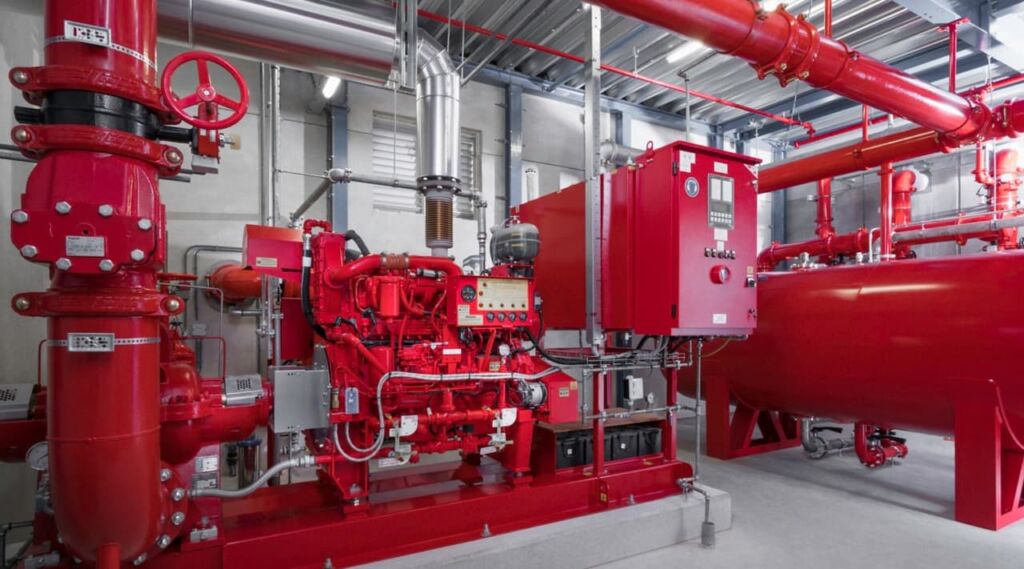
In cases in which the municipal water supply is not available, reliable, or it cannot provide adequate flow for the fire pump, a fire pump and water storage tank needs to be used. This is because a fire pump alone can only increase the water pressure; it cannot increase the flow available. Water storage tanks and pumps are usually seen in facilities with systems that have a significant water supply demand, such as large warehouses. Water storage tanks can be made of various materials such as wood, steel, concrete, fiberglass-reinforced plastic (FRP), and rubberized fabric.
NFPA 22, Standard for Water Tanks for Private Fire Protection, provides the minimum requirements for the design, construction, installation, and maintenance of tanks and accessory equipment that supply water for private fire protection, including:
- Gravity tanks
- Suction tanks
- Pressure tanks
- Towers
- Foundations
- Pipe connections and fittings
- Tank filling
- Protection against heating
This blog will explore some of the most common types of water tanks as well as introduce some of the common water tank equipment and accessories used.
Types of Water Tanks
There are several different types of water storage tanks. Depending on the needs of the system that the tank is supporting and the geographical and topographical location of building, the type of tank that is used will vary. Each type of water storage tank can have vastly different system components.
Gravity Tanks
Water pressure increases by 0.433 psi for every foot of elevation gain (0.0981 bar per meter). Gravity tanks, otherwise known as elevated tanks, take advantage of this by increasing the height of the water to increase the pressure created by gravity. These types of tanks are typically not used for private fire supplies and instead are part of municipal water supplies.

Suction Tanks
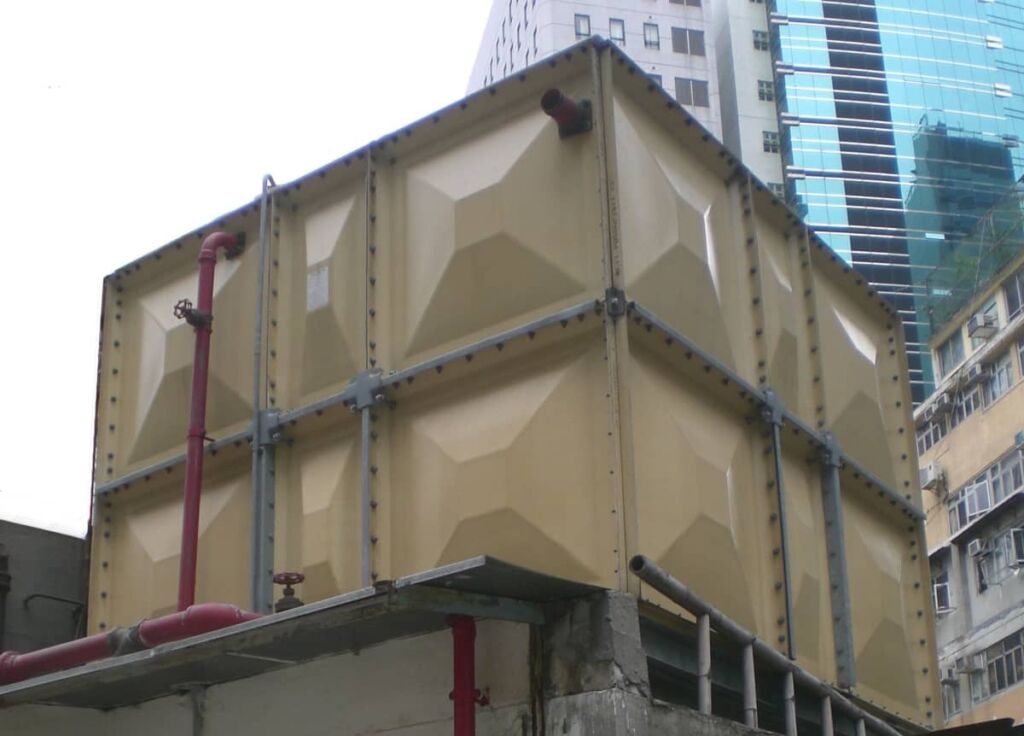
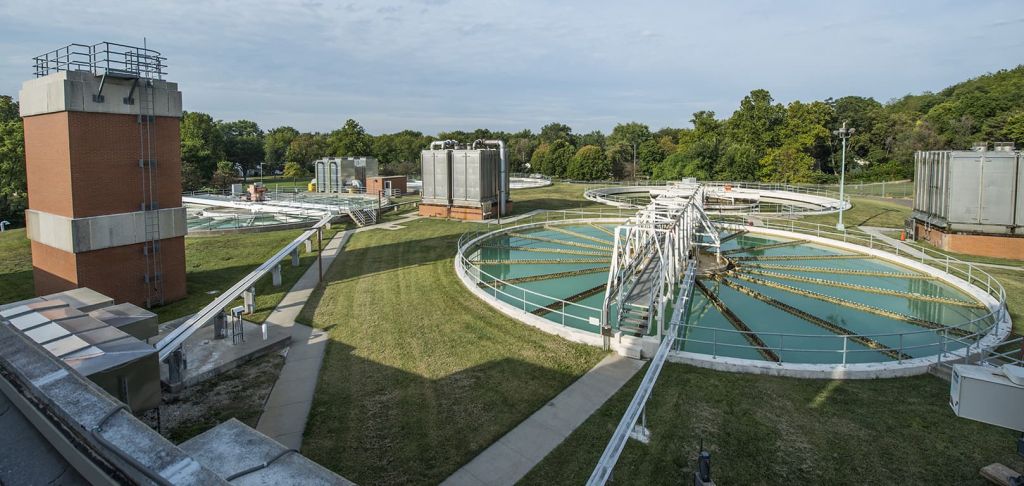
Suction water tanks are located on the ground. Because of this, they do not create pressure. Instead, they are used to provide water to a fire pump, which creates the needed pressure for the fire protection system. These are the most common type of tank used because they tend to be more cost effective, but they take up much more space than the next option.

Underground Tanks
Underground tanks are like suction tanks in that they do not create their own pressure but rather they supply a fire pump with water, and the fire pump creates the needed pressure. These tanks require a vertical turbine pump or the pump be located below the level of the tank.

Water Tank Capacity
NFPA 22 does not provided requirements for water tank capacity. Instead, it directs you to the standard for the fire protection system that is being supplied. The required capacity is calculated by multiplying the system demand flow rate by the required duration. For example, NFPA 13, Standard for the Installation of Sprinkler Systems, requires specific minimum durations based on the hazard classification and sprinkler system supervision. If a light hazard sprinkler system had a system demand of 100 gpm (380 L/min) for a duration of 30 minutes, then the minimum required capacity would be 3,000 gallons (11,400 liters).

Water Tank Accessories and Equipment
There are many accessories and equipment that are needed for a water tank to ensure that it is a reliable water supply.
Tank Heater
Water tanks and the associated piping needs to be maintained at or above 42°F (5.6°C) to protect against freezing. Calculations are needed to determine if this protection can be afforded with either insulation alone or if a tank heater is needed. If the lowest one-day mean temperature is greater than or equal to 5°F (-15°C), heating systems are only required for elevated tanks. If the lowest one-day mean temperature is less than 5°F (-15°C), then calculations are needed to determine if a heater is needed and to determine the capacity of the heating system.
Water Level Gauge
A water level gauge is needed on all water tanks to be able to see the level of the water in the tank. A listed high and low water alarm can be used in lieu of a water level gauge.
Anti-Vortex Plate
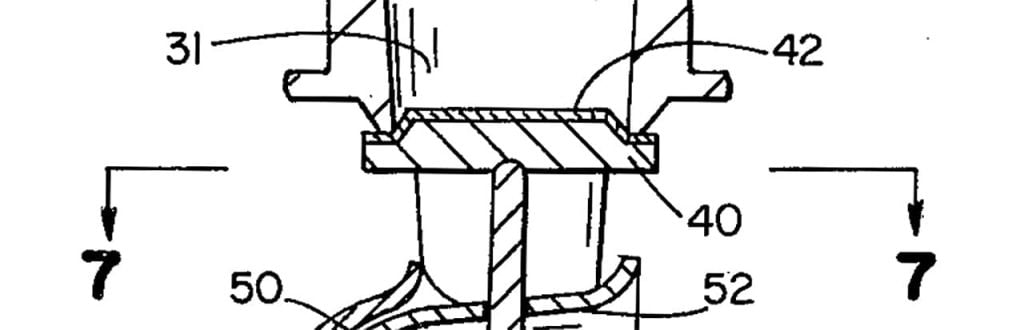
The discharge outlet of every suction tank is required to be equipped with an anti-vortex plate. This anti-vortex plate is installed to eliminate the possibility of a vortex being created, similar to the vortex seen when draining a sink or bathtub. This vortex would allow air to enter the suction pipe, travel to the fire pump, and lead to cavitation.

Figure B.1(o), Suction Nozzle with Anti-Vortex Plate for Welded Suction Tanks, NFPA 22
Tank Filling
There must be a permanently installed inlet pipe to fill the water tank, and it must be sized to fill the tank in 8 hours or less. Additionally, the water level needs to be maintained within 4 in. (100 mm) of the required fire protection level (determined by the required capacity). Typically, this is done with an automatic tank fill, but can be done manually if approved by the authority having jurisdiction (AHJ).
Inspection, Testing, and Maintenance
As with any component of a fire protection system, the proper inspection, testing, and maintenance (ITM) is crucial to ensure that these systems are reliable. NFPA 22 refers to NFPA 25, Standard for the Inspection, Testing, and Maintenance of Water-Based Fire Protection Systems, for all ITM of water tanks. The requirements can be found in Chapter 9 of NFPA 25.

Fire Sprinkler Installation & Management
Fire Protection Contractors License #C16-1045293
For more information please visit:
















































































PEOPLE We Protect

































Our Distributors and Suppliers








Experience
Our team started in the fire protection industry over 20 years ago. Since then we have grown into a statewide fire protection construction leader. Our team of project managers, engineers, designers, inspectors, installers, and technicians all share a passion for quality work and high standards. Precision Fire Protection understands the need to complete projects with integrity, safety, and precision!
Dedication
Our mission is to provide our customers with timely, high quality, affordable fire protection services that are guaranteed. We strive to achieve our client’s complete satisfaction. We are relentless in applying the highest ethical standards to ourselves and to our services and in communications with our customers. We aim to fulfill that mission in everything we do.
Precision
Precision Fire Protection keeps its team together, even when it's not. Just as vital as field personnel’s tools are, our project managers are equipped with the latest software to manage projects. Our project managers send dailies, RFIs, and plan revisions to the cloud so that everyone has access no matter where they are. Being connected is our way of ensuring every project goes smoothly.
Safety
Our team of multi-certified managers and supervisors are highly experienced in job safety. Our managers are OSHA certified to handle each project with care and sensitivity to every unique job site. By ensuring on-site safety on every project we work on throughout Southern California, Precision Fire Protection has developed positive relationships with our General Contractors.
